Comparison guide
Waterproof vs Shade Cloth Sails — which fabric is right?
Same beautiful sail shape, two very different fabrics. Here's how PVC and knitted shade cloth compare on rain, UV, wind and cost - from the workshop that makes both.
Get a Free QuoteThe quick verdict
Decide on one question: does the space need to stay dry? If yes - outdoor dining, a carport, a cafe courtyard - choose a waterproof PVC sail. If the job is sun protection - a pool, playground or hot north-facing deck - choose knitted shade cloth: it blocks up to 97% of the sun, breathes so it’s cooler underneath, handles wind better and costs less. Dry space, PVC; cool space, cloth.
The nuance is structural. A waterproof sail catches water and wind instead of letting them through, so it needs heavier posts, footings and fixings - that’s engineering, not upsell. Site exposure, span and how you use the area all feed the recommendation, and because we manufacture both fabrics in our Pirongia workshop, the advice at your free measure starts with the space rather than the product.
Side by side
How they compare
Knitted shade cloth sail
- Upfront cost
- $ - $$. Lighter fabric and lighter structure make it the more affordable sail for the same footprint.
- Weather protection
- Superb sun cover - Monotec 320 offers up to 97% shade and Monotec 370 up to 90% - but rain passes through the knitted mesh.
- Wind handling
- Excellent. Air moves through the mesh, so wind load on posts and fixings is lower and the area underneath stays cooler.
- Looks
- Light, airy curves in 14-15 colours; the widest cloth (Monotec 370) means fewer seams on large sails.
- Maintenance
- Low - no water pooling to manage, 13 year fabric warranty, 100% recyclable at end of life.
- Best for
- Pools, playgrounds, courtyards and summer entertaining areas where UV is the enemy, not rain.
Waterproof PVC sail
- Upfront cost
- $$ - $$$. The PVC membrane and the heavier engineered structure behind it cost more than shade cloth.
- Weather protection
- All-weather. Solid PVC sheds rain as well as blocking sun, so the space works in every season.
- Wind handling
- Engineered for it - structures are built heavier to carry the weight of water and the pressure of wind.
- Looks
- Sleek solid membrane, colour co-ordinated sail and posts to blend with your house - and it doesn't rust or rot.
- Maintenance
- Low but built serious: 100% teflon non-rot thread, weldable joins, marine grade stainless, 5 year UV guarantee.
- Best for
- Carports, cafes, porches and dining areas you want usable year-round, rain or shine.
The case for knitted shade cloth
Knitted shade cloth is the fabric most people picture when they think of a shade sail, and for sun protection it’s hard to beat. We work with two Monotec fabrics: Monotec 320, a commercial-grade cloth knitted from HDPE monofilament and tape filament that delivers up to 97% shade and suits small-to-medium residential sails, and Monotec 370, the strongest shade mesh available and the widest cloth made - ideal for larger sails and structures because wider cloth means fewer seams. Both carry a 13 year warranty, both are 100% recyclable, and between them you have 14 to 15 colours to work with.
The knitted construction is the practical advantage. Air passes through the mesh, so the area underneath stays cooler than under any solid material, and wind spills through rather than loading up the posts - which is why shade cloth is the default for exposed sites, pools, playgrounds and school courtyards. Rain passes through too, of course; a summer shower drains away rather than pooling overhead. Corners and edges are finished with either a preset webbing edge or an adjustable wire edge with marine grade stainless components. If your space only really suffers from October to April, and it suffers from sun, this is your fabric.
The case for waterproof PVC
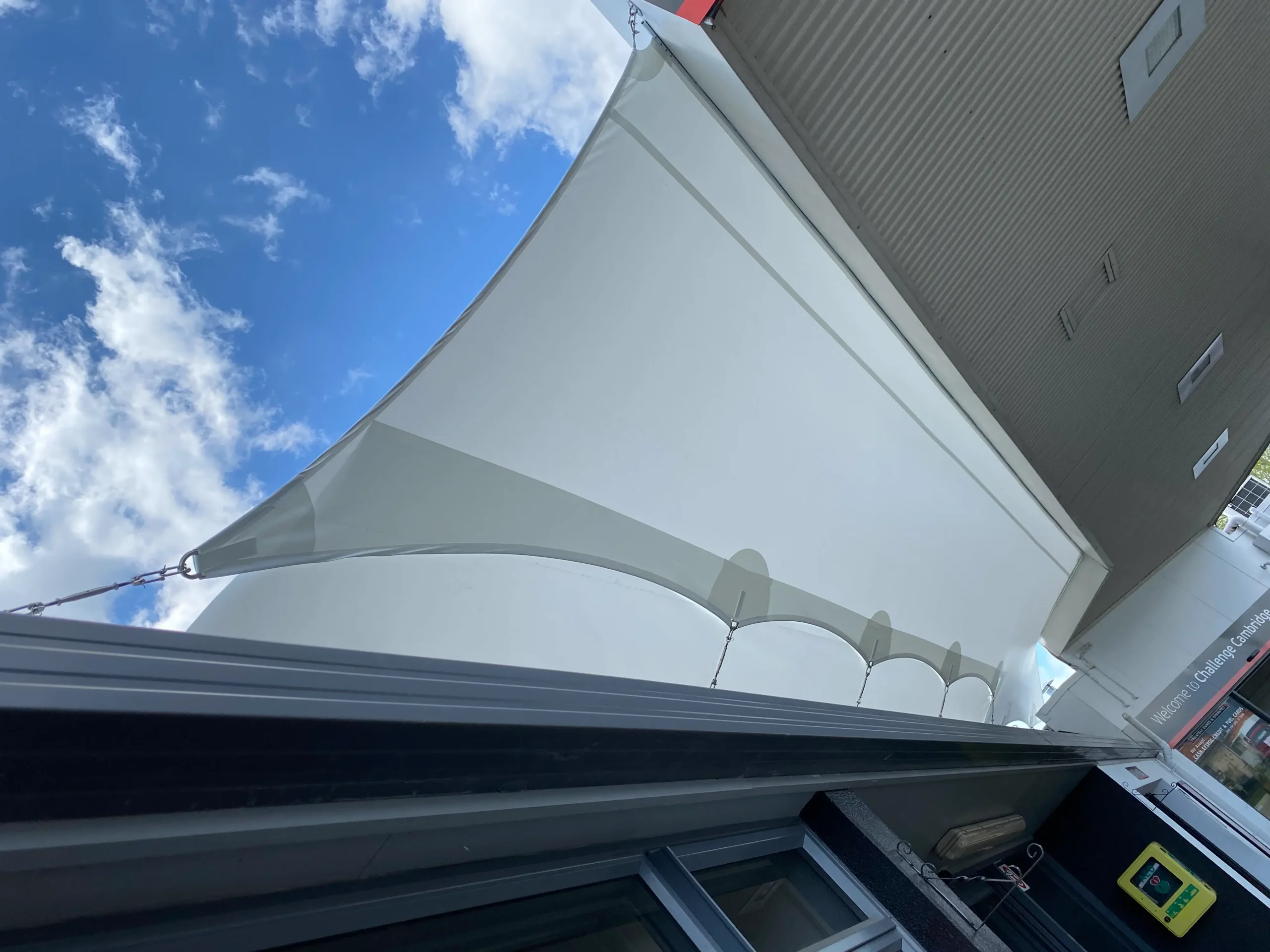
A waterproof sail turns an outdoor area into genuinely usable space in every season - rain on the roof, dry table underneath. The membrane is PVC up to 2.5 metres wide per panel, sewn with 100% teflon thread that doesn’t rot, with weldable joins and marine grade stainless steel fittings, backed by a 5 year UV guarantee. Because the sail catches the weather rather than letting it through, the supporting structure is deliberately heavier: heavy duty galvanised, powder coated steel poles engineered for the weight of water and the pressure of wind. We use only top quality materials here, because shortcuts on a waterproof structure cause real problems down the road.
That engineering opens up jobs shade cloth can’t do. Waterproof sails make outstanding carports - unlike the common carports you see rusting and rotting, PVC doesn’t do either - and they’re ideal for uncovered porches, cafes, barbecue areas, school courtyards and playgrounds that need all-weather cover. With a huge selection of colours for both sail and posts, the whole structure can be colour co-ordinated to blend with your house instead of shouting at it. If you’ve ever cancelled an outdoor dinner because of a forecast, this is the fabric that fixes it.
Our recommendation
Let the job pick the fabric
Over a pool, playground or exposed summer deck, choose knitted shade cloth - maximum UV protection, cooler underneath, kinder to the structure in wind, and the lower-cost option for the same coverage. Monotec 320 for smaller residential sails, Monotec 370 for big spans where seams would show.
Over an outdoor dining area, carport, porch or cafe courtyard, choose waterproof PVC and budget for the heavier structure it rightly needs - that’s what makes it safe and durable. Plenty of properties end up with one of each: cloth over the pool, PVC over the table. Both come out of the same Pirongia workshop, measured, made and installed by the same team, so you won’t get a fabric pushed on you - you’ll get the one the space actually calls for.
Waterproof vs shade cloth — questions
Will a shade cloth sail keep the rain off at all?
No - and it isn't meant to. Monotec shade sails are knitted mesh, designed for sun protection and airflow; rain passes through. If you need the area dry underneath, a waterproof PVC sail is the right product. If you need cool, UV-safe shade, the mesh is actually the better performer because it breathes.
Why do waterproof sails cost more than shade cloth sails?
Two reasons: the fabric and the structure. Solid PVC membrane costs more than knitted mesh, and because a waterproof sail catches rain and wind rather than letting them through, the posts and fixings must be built heavier to handle the weight of water and the pressure of wind. It's a more complex installation, done with marine grade stainless steel, weldable joins and heavy duty galvanised poles.
Which is better over a swimming pool?
Knitted shade cloth, almost every time. It delivers up to 97% shade with excellent UV protection, stays cooler underneath than solid materials, and handles wind well - and nobody minds a bit of rain reaching a pool. Save the waterproof sail for the poolside dining area if you want that dry.
Can a waterproof sail really work as a carport?
Yes - waterproof sails make great carports that are aesthetically pleasing and extremely practical. Unlike common carports that rust and rot, PVC sails don't, and the galvanised, powder coated steel posts resist rust too. Sail and post colours can be co-ordinated to blend with your house rather than looking like an add-on.
“We’ve got you covered”
Not sure which fabric? Get free advice
Tell us how you use the space and we'll measure it, recommend the right fabric and structure, and give you a no-obligation quote.